

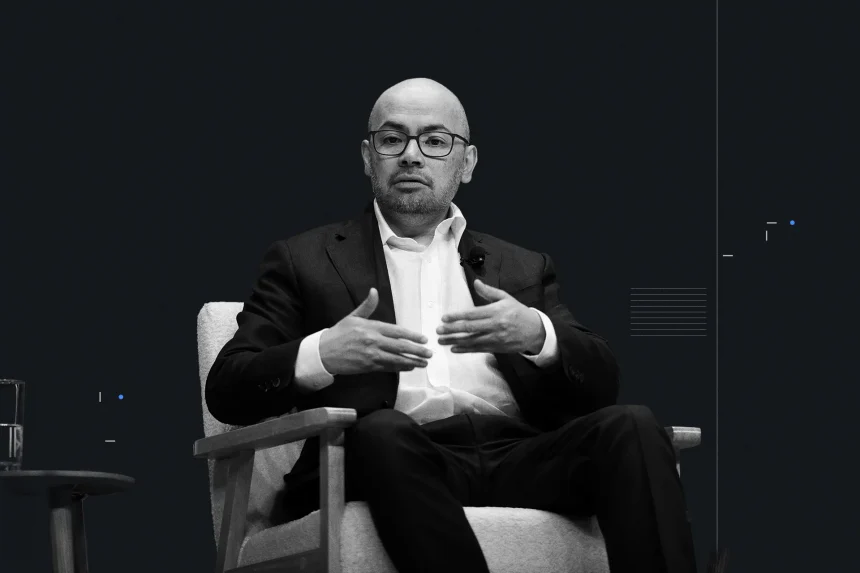
Google has announced a sweeping overhaul of the leadership of its artificial intelligence effort: Demis Hassabis, co-founder and longtime head of DeepMind, is leaving the post of CEO of Google DeepMind. The news broke on August 5, 2026, and in scale the event proved far more serious than a simple “stepping back from operational matters.” At the same time, another legendary figure is leaving the company — Jeff Dean, Google’s chief scientist, who worked there for 27 years. Together, these two announcements represent the largest leadership change in the history of Alphabet’s AI research wing.
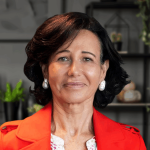
Hassabis is not leaving the company entirely. He is moving to the post of chairman of Google DeepMind and becoming chief scientist of Alphabet, while also continuing to lead Isomorphic Labs — a spinoff that applies AI methods to the discovery of new drugs. He explained the decision this way: “I’ve decided that now is the right time for me to hand over my day-to-day operational responsibilities at GDM, so that I have the time and space to focus on the big picture.” In other words, the man who led DeepMind from its very founding in 2010 and brought the company to the 2024 Nobel Prize in Chemistry for its work on AlphaFold is deliberately stepping back from routine management for the sake of a strategic, scientific role.
Operational leadership of Google DeepMind passes to Koray Kavukcuoglu, the division’s current chief technology officer. He is being promoted to senior vice president and will be responsible for day-to-day operations, reporting directly to Alphabet and Google CEO Sundar Pichai. Kavukcuoglu is a seasoned researcher who has worked at DeepMind for a long time and is deeply immersed in the technical side of model development, so for the team this is an internal promotion rather than the hiring of an outsider.
However, the parallel departure of Jeff Dean gives the whole story a more dramatic tint. Dean is one of the most legendary engineering figures in Silicon Valley, a person whose name is tied to Google’s foundational systems, from MapReduce to TensorFlow. Now he is founding Discovery Loop — an independent public-benefit corporation that will develop “self-improving” artificial-intelligence systems. Google will act as an investor and cloud provider for the new venture. Dean explained the ambition this way: “We think there is opportunity for AI to more fully automate what has traditionally been a very human-intensive experimental loop.” He is speaking about automating the very process of scientific discovery — an extraordinarily ambitious goal that echoes conversations about recursive self-improvement of AI.
Along with Dean, a whole cohort of senior specialists is leaving: Sanjay Ghemawat — his longtime collaborator and one of Google’s key engineering figures; Oriol Vinyals — a DeepMind vice president known for his work on large models; and Quoc Le — a co-founder of Google Brain. Losing several people of this caliber at once is not an ordinary personnel rotation but a genuine drain of intellectual capital that will force Google to redistribute responsibility within its research structures.
What does this overhaul mean for Google and the industry as a whole? First, it reflects a longstanding internal tension between pure research and the product race. In recent years Google has been under enormous pressure: competition with OpenAI, Anthropic, and Meta forces the company to convert scientific breakthroughs into commercial products faster. Hassabis’s move to the role of “chief scientist,” free of operational routine, can be read as an attempt to preserve the long-term, ambitious research vector — the very one that led to AlphaFold — at a moment when the rest of the company is increasingly oriented toward the rapid release of products such as the Gemini models.
Second, the emergence of Discovery Loop with Google’s blessing and financial backing signals a new model of relations between big technology companies and star researchers. Instead of keeping talent within corporate walls, Google is effectively “releasing” Dean into his own venture while remaining an investor and partner. This echoes a broader trend in which leading AI researchers found their own structures, while the giants retain access to their work through investments and cloud contracts.
For competitors, these changes are a signal that even the industry’s most stable research teams are in motion. For Kavukcuoglu, it is an enormous challenge: to lead DeepMind’s operations at the moment when the two most influential figures are departing, and at the same time to keep pace in a race where every month brings new releases from rivals. And for Hassabis himself, the new status means the chance to focus on what he has always called the main goal — using AI to solve humanity’s fundamental scientific problems.
Hassabis’s legacy gives these changes particular weight. Under his leadership, DeepMind traveled the road from an ambitious London startup to one of the most influential research organizations in the world. It was here that AlphaGo was born — the program that defeated a world Go champion and symbolically marked a new era of AI — and AlphaFold, which effectively solved the fifty-year-old problem of predicting protein structure and brought Hassabis and his colleague John Jumper the 2024 Nobel Prize in Chemistry. Hassabis’s move to a role free of daily operational routine, and his retention of leadership over Isomorphic Labs, unambiguously signal where he wants to direct his energy: toward the application of AI to fundamental science and medicine, where, in his conviction, the technology is capable of bringing the greatest benefit to humanity.
The broader lesson of these events is a reminder of how unstable the AI-talent market has become. The simultaneous stepping back of Hassabis from operations and the departure of Dean from the company — and with a whole group of leading engineers, no less — illustrates that even the most prestigious research centers can no longer take the retention of star specialists for granted. Competitors — OpenAI, Anthropic, Meta, and numerous well-funded startups — wage a ceaseless hunt for the best minds, offering them either enormous compensation or the chance to lead their own ambitious projects. For Google, this is a challenge of a dual nature: to keep pace in the product race and at the same time to preserve the research spirit that made DeepMind unique. How successfully Kavukcuoglu handles this balance will determine whether Google DeepMind remains in the top tier of global AI or cedes ground to younger and hungrier rivals.
The future of Isomorphic Labs, to which Hassabis will now be able to devote more time, deserves separate attention. This Alphabet spinoff applies the achievements of AlphaFold and other AI methods to the discovery of new drugs, and it is precisely this direction that Hassabis has repeatedly called capable of bringing the most tangible benefit to humanity — from accelerating the development of therapies to lowering the cost of clinical research. If the company brings its first drug candidates to clinical trials, it will be a powerful argument in favor of the entire bet on “scientific AI.” At the same time, the operational team of Google DeepMind under Kavukcuoglu’s leadership will have to keep pace in the product race, where the key front remains the Gemini line of models and its ability to compete with the products of OpenAI and Anthropic. Thus, the leadership overhaul effectively separates two missions that long coexisted in one person: long-term fundamental research — with Hassabis, and the daily competitive fight — with the new operational leadership.
Sources: Axios, Engadget, Fortune, The Decoder (August 5, 2026).