

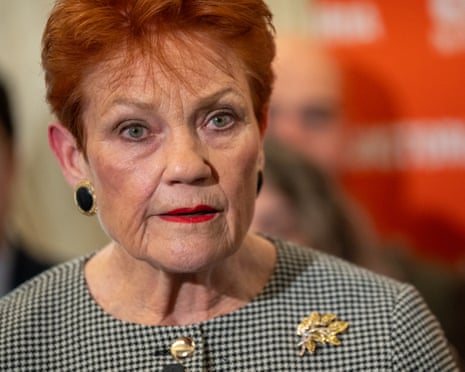
Pauline Hanson has been a prominent and controversial presence in Australian politics for several decades. She first attracted national attention in 1996 after winning the Queensland seat of Oxley in the House of Representatives. The following year, she became the founding leader of Pauline Hanson’s One Nation.
Hanson built her political identity around opposition to established political institutions and concern about immigration, multiculturalism, globalisation and government policy affecting working-class Australians. Her speeches generated intense national debate, with supporters praising her willingness to discuss subjects they believed mainstream politicians avoided.
Her opponents have strongly criticised her rhetoric, particularly her statements about immigration, race, Islam and Indigenous affairs. These controversies have made Hanson one of the country’s most divisive public figures.
After losing her lower-house seat in 1998, Hanson remained politically active and contested several elections. Her eventual return to federal politics came in 2016, when she was elected to the Senate for Queensland. This marked a significant revival for One Nation and gave the party a renewed role in parliamentary negotiations.
Hanson’s political durability reflects her ability to connect with voters who feel ignored by traditional parties. She presents herself as a representative of ordinary Australians frustrated by rising costs, political correctness and decisions made by distant institutions.
At the same time, her critics argue that her approach simplifies complex problems and deepens social division. Her career therefore raises broader questions about populism, media attention and public dissatisfaction with conventional politics.
Whether admired or opposed, Pauline Hanson has influenced Australia’s national conversation and demonstrated how outsider movements can maintain political relevance over an extended period.